

How Legal Systems Actually Work
Legal systems have hierarchies of norms, courts, and defined procedures. Understanding competence, venue, and jurisdiction is essential.
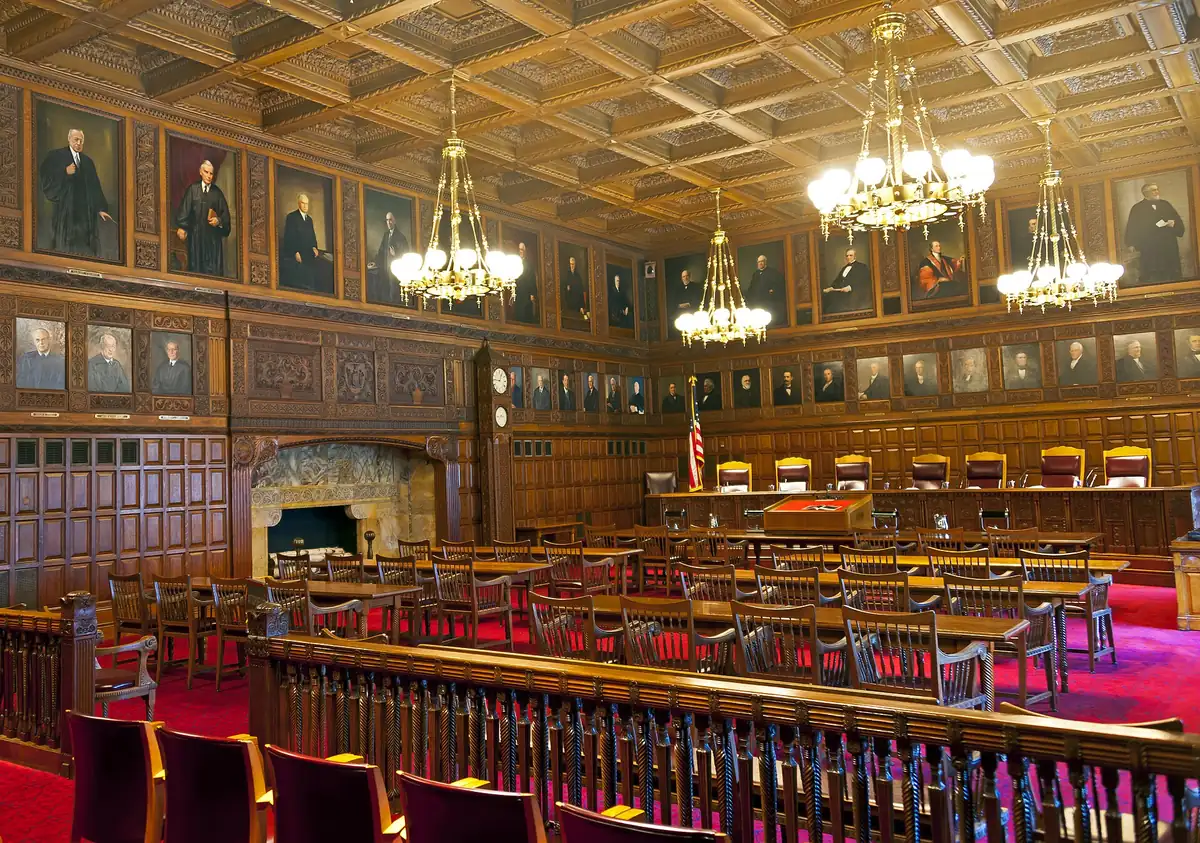
- Reading time: 15 min
- Ends with a quiz
What this chapter covers
- No Romance. Just Machinery
- Network of Institutions
- Hierarchy of Norms
- Jurisdiction, Competence, Venue
- Why Lawyers Obsess Over Procedure
- The Car Accident Example
- What This Means for AI
TL;DR (Core Understanding)
Legal systems are not about truth, justice, or common sense. They are machines. Inputs go in, procedures run, outputs come out. If you don't respect procedure, hierarchy, and jurisdiction, you lose even when you're "right."
Bottom line: Lawyers obsess over mechanics because mechanics decide outcomes.
1No Romance. Just Machinery.
People imagine law as lofty principles: the kind of story The Origin of Law tells. In practice, law works like an administrative engine:
Miss one step and the whole thing collapses.
Not unjustly. Mechanically.
This is why legal systems feel cold. They are designed to scale, not to empathize.
Visual: The Legal Machine
2The Legal System is a Network of Institutions
At minimum, every functioning legal system has variations of the same actors:
Courts
They decide disputes. They don't investigate, enforce, or regulate proactively. They react to cases brought before them.
Regulators & Ministries
They set rules, monitor compliance, and enforce within specific sectors. Think labor authorities, financial regulators, telecom regulators.
Bars & Professional Bodies
They control access to the profession. Who can call themselves a lawyer, under what rules, and with what discipline.
Key reality: Courts don't run the system alone. Regulators often shape reality far more than judges ever will.
3Hierarchy of Norms (This Beats Everything Else)
Every legal system follows a vertical order of rules. If you violate the order, your argument dies.
Typical Hierarchy (Top to Bottom)
A lower rule cannot contradict a higher one. Ever.
Example: A contract clause that violates a labor law is void, even if both parties signed happily.
Lawyers don't argue "fair." They argue where the rule sits in the hierarchy.
Visual: Hierarchy of Norms Pyramid
Lower rules cannot contradict higher ones
Law is Time-Indexed
Every rule exists at a specific point in time. A correct rule:
- • in the wrong year
- • under the wrong amendment
- • before a reform
...is legally wrong.
Law does not update itself. Anyone answering legal questions without anchoring time is guessing.
4Jurisdiction, Competence, Venue (The Holy Trinity)
Most non-lawyers lose cases before substance even starts because they ignore this. Working through the triage yourself first with the Jurisdiction Finder can save you from filing in the wrong place entirely.
Jurisdiction
Which legal system applies? Country, state, federal, international.
Competence
Which type of authority can hear the matter? Civil court, labor court, administrative body, regulator.
Venue
Which specific court/location is allowed to hear it?
If you file in the wrong place, the case doesn't get "considered badly."
It gets dismissed.
Visual: Jurisdiction Flowchart
Which legal system?
Which type of body?
Civil, labor, admin?
Which specific court?
5Why Lawyers Obsess Over Procedure
Procedure is the rulebook for how the machine runs:
Courts don't fix your mistakes. They punish them.
Being right but late is still wrong.
This is why lawyers sound annoying when they say "we need to file X before Y." They are not pedantic. They are keeping the machine from ejecting you.
Procedural Nullification (Why being right is irrelevant)
A legal right only exists if procedure allows it to exist.
Your claim doesn't weaken. It dies.
This is called procedural nullification: the loss of substantive rights due to procedural failure.
Courts don't rescue correct outcomes from procedural mistakes. They enforce the machine. This is why legal systems feel brutal. They are.
6The Car Accident Example (Simple, Brutal, Accurate)
You crash a car into another one.
What actually happens legally:
Your feelings don't appear anywhere in this chain.
7Why "Justice" Depends on Mechanics
Two identical cases can end differently because:
From the outside:
This looks unfair.
From inside the system:
It's consistency.
Legal systems trade emotional fairness for procedural predictability.
8Courts vs Regulators (Who Really Decides)
Important reality:
Courts
Resolve disputes after damage occurs
Regulators
Shape behavior before damage happens
In many industries, regulators matter more than judges:
If you ignore regulators and focus only on courts, you're already late.
9How Cases Move, Stall, or Die
Cases don't fail dramatically. They rot.
Common Failure Modes:
- Wrong jurisdiction
- Procedural defects
- Evidence rejected
- Strategic delays
- Appeals used as pressure
Money and power show up here:
- Who can afford delays
- Who can fund appeals
- Who can exhaust the other side
Law is slow on purpose. Slowness is leverage.
That's Chapter 2.
Now you understand the machinery: hierarchy, institutions, procedure, and power. Next, we'll explore the ecosystems where this machinery operates.
📝 Chapter 2 Quiz
Test your understanding of how legal systems actually work.